
Úbeda! – I want to return when I travel to Spain
The town in which I was lucky to spend my 8 days of the program was Úbeda. Each day exposed a different layer of the town and its history.
Situated in the heart of Jaen, in Andalusia, Úbeda feels like an island in the middle of an ocean of olive groves. Given its commanding hill position, it feels like the master of olive oil.
And for a person who did not grow up with olives trees, our excursion to the olive oil cooperative, led by the extremely knowledgeable and passionate Tomas, was a deep dive into learning about the cultivation of olives and the production of olive oil, from tree to bottle, and its importance to the economy and history of the region. Úbeda is one of the main towns for olive oil production in Jaen, which in total has over 60 million olive trees, and produces 40% of Spain’s olive oil.
We were shown all aspects of the operation, from intake and sorting of the olives, to pressing and to storing and bottling (or canning.) All of this occurs within 24 hours of the olives being picked and shipped to the facility. Extreme care is taken to preserve the character and quality of the oil.[/text_output]
Olive oil may be termed “liquid gold” because it is essential to the economy of the region, but for me, it is liquid gold because I can’t think of anything that tastes better than the third olive oil that we tried. Each of the olive oils was extra virgin, and one thing I learned is to never use anything other than extra virgin.
The tasting had a lasting impact on me as I now only use very good, extra virgin olive oil, always checking the label to see if it is from Úbeda!
[/text_output]
Only a reluctance to carry it stopped me from purchasing my favorite piece, an intricately painted blue and white wine jug. (Luckily, another participant purchased it, giving me another good reason to visit!) But I couldn’t totally resist, so I purchased a cobalt (signifying aristocracy) small bowl as a souvenir. I use it all the time, sometimes for olive oil, and am reminded of chatting away with Tito, in Spanish. Thank you, Pueblo Español for without your program, I would not have been able to have the same exchange with Tito, a true artist!
[/text_output]
Among the interesting items was a replica of the Aboda Zarah, a treaty in the Talmud, which was completed in Úbeda at the end of 1290.
[/text_output]
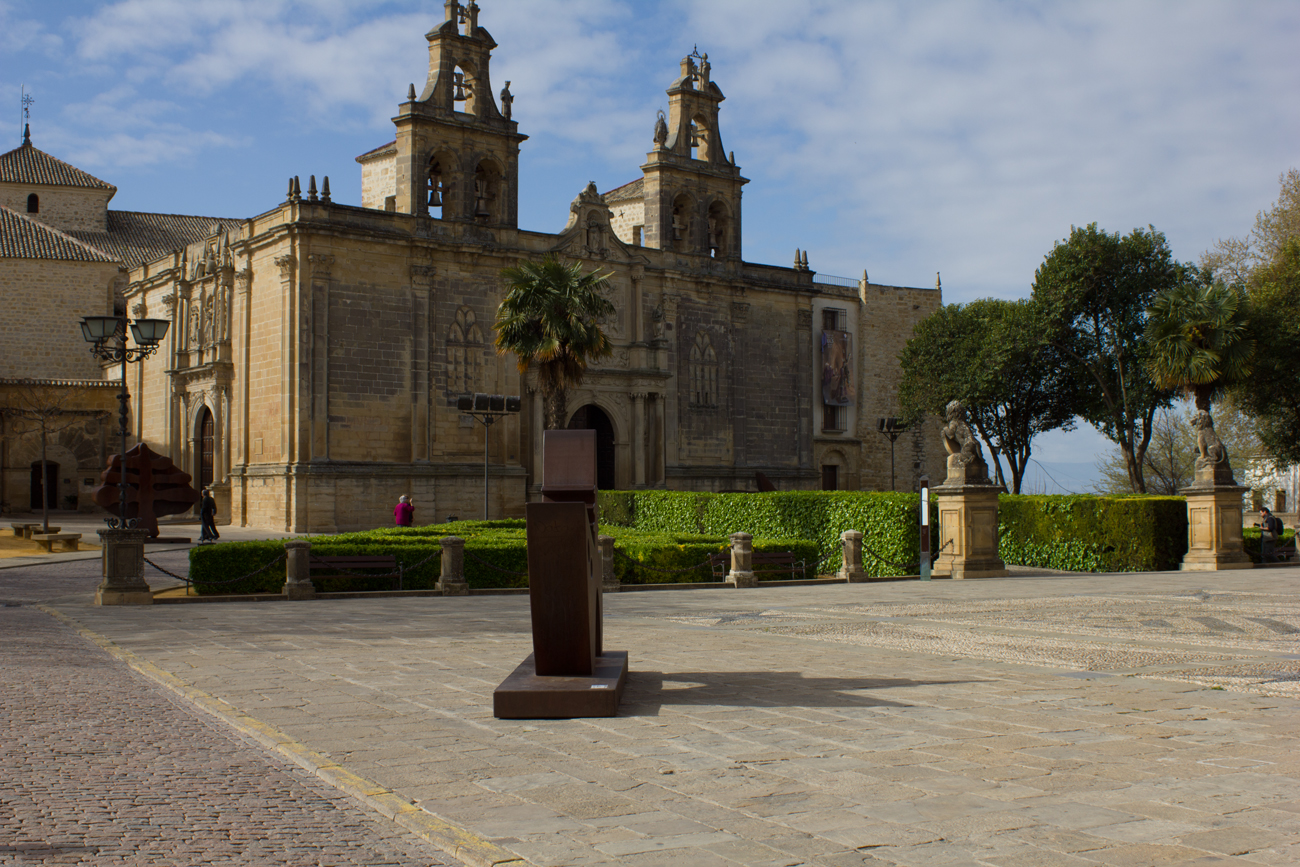
The Renaissance is also well represented in Úbeda, making walking around a stroll through the architecture of the sixteenth and seventeenth centuries. For this, Úbeda has received recognition as a Unesco World Heritage site. Notable buildings include The Sacred Chapel of El Salvador, the church of the church of Santa María de los Reales Alcázares and the Palace of Cadenas, which surround the Plaza Vázquez de Molina. My favorite time to enjoy these buildings was during my morning run, and then again in the warm glow of the early evenings.
[/text_output][image src=”3858″ alt=”” href=”” title=”” info_content=”” lightbox_caption=”” id=”” class=”” style=””]
[/text_output]
When, not if, I return to Úbeda, I will do every one of these things again!
[/text_output]
Tag:andalucia, spain, travel, travelspain, ubeda
